

Opti-Soothe
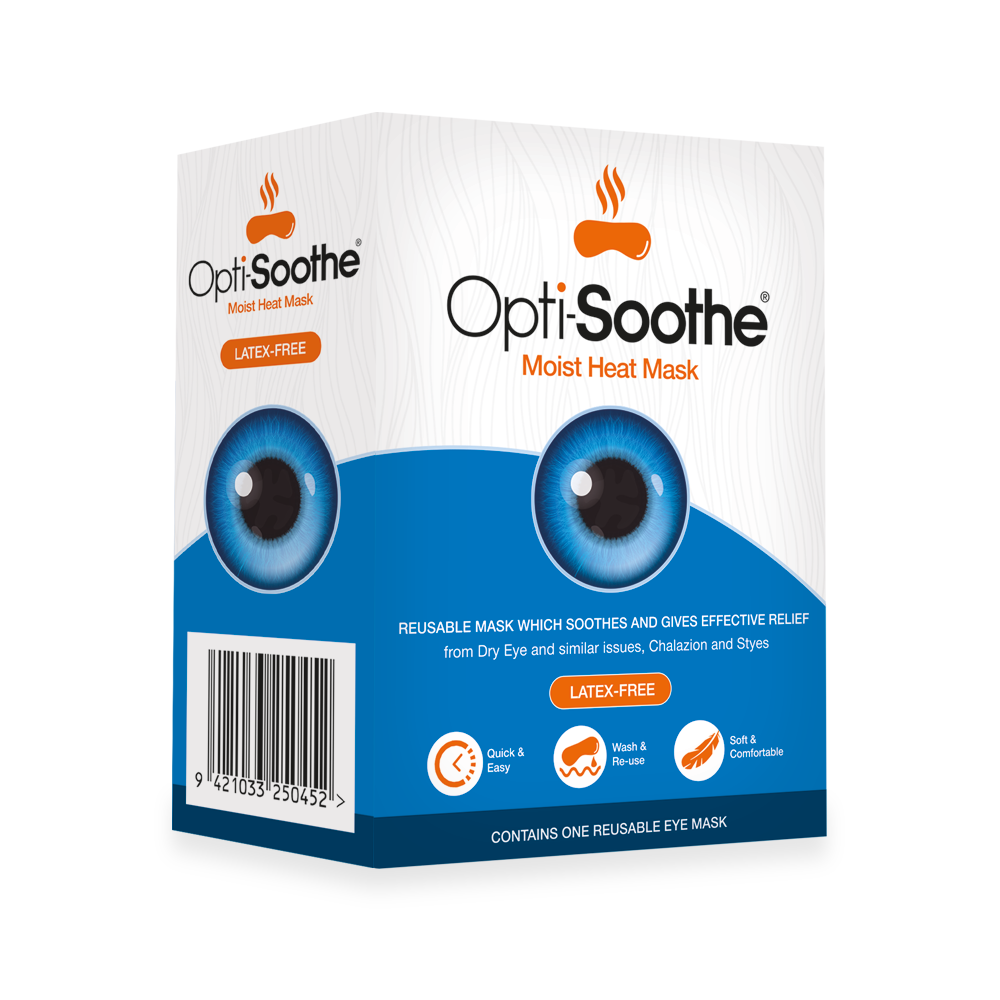
Opti-Soothe Moist Heat Eye Mask
Opti-Soothe Moist Heat Eye Mask
✔ Stock on hand — ships NZ-wide from Rose Optometry, Hamilton.
Moist heat — and a mask that also works cold
Most dry eye in New Zealand is evaporative. The oil (meibomian) glands in the lid margin block, the tear film destabilises, and drops that replace water do nothing about oil. Warm compression is the first-line treatment, because meibum that is thick and waxy at body temperature softens once the lid is warmed.
The numbers that matter. A 2024 evidence review in Ophthalmology and Therapy puts the target at an eyelid temperature of at least 40°C, held for at least 10 minutes, once daily — 40°C being the identified temperature of therapeutic efficacy, and once daily deliberately rather than more often, because adherence falls as the frequency rises. Normal meibum melts across roughly 19–45°C, with healthy oil at the lower end, and in MGD the thickened meibum sits at the higher end, often above normal body temperature (37°C). That is precisely why body heat alone never clears a blocked gland, and why external heat is required.
Opti-Soothe uses HydroBead technology: the beads draw moisture from the air and, once heated, release a consistent moist heat. Moist heat conducts into the lid far better than dry heat, which is why we dispense this rather than a wheat bag.
Heat it for the time given on the pack — microwave output varies enough between appliances that a fixed number of seconds is a burn risk rather than a help — and test it against your inner wrist every time before it goes near your eye. Apply to closed lids for at least ten minutes, once daily, reheating as needed to hold the warmth for the full ten minutes, massage gently toward the lash line, then clean the lid margin using our lid hygiene range. Most people notice a difference within two to three weeks of daily use alongside lid hygiene and lubricants. It also works cold — 30 minutes in a sealed bag in the freezer, then five to seven minutes on closed lids for allergy, puffy lids or lens irritation.
Please read before ordering. The head straps on some stock contain latex, and a latex-free version is progressively replacing it — tell us before you order if you have a latex allergy. Do not use it if you have diabetes, poor circulation, reduced sensation or recent eye surgery without speaking to us first.
Who it’s for
- Diagnosed MGD or evaporative dry eye, where daily heat is the treatment
- Styes and chalazia — heat is the mainstay for both
- People who want a reusable mask rather than something disposable
- Anyone who also wants a cold compress for allergy season or puffy lids
- Households with a microwave and ten minutes a day to give it
Questions we get asked
How long do I microwave it?
Follow the time printed on the pack, and treat that as the authority rather than us — microwave output varies enough between appliances that a time which is right in one kitchen will overheat a mask in another, so we will not put a number on it. Test it against your inner wrist every single time before it goes near your eye, and never add “just a few more seconds”. If it cools before your ten minutes are up, reheat it and carry on — holding the warmth for the full ten minutes is what matters.
Is this microwavable or USB?
Microwavable. If you have no microwave, or you want the heat held steady for the whole session rather than cooling gradually through it, the iFlo USB mask is the alternative — a mains-powered unit holds its set temperature for the whole session without reheating, though it costs considerably more and needs a USB port.
How is it different from a facecloth?
A hot towel or facecloth holds the eyelid above 40°C for only about the first minute, and drops below target within two minutes — you would have to reheat it every two minutes to hold it there, which is why almost nobody succeeds with one. Those figures come from the same review, and they are the whole reason a proper compress exists. Gland treatment needs at least 10 minutes at 40°C or above, once daily, and most people notice a difference within two to three weeks.
How do I clean it?
Wipe it down and let it air dry, and wash the cover if yours has a removable one, following the instructions on the pack. Do not soak or boil the mask itself, do not put it through a hot wash, and do not share a mask between people.
Can I use it with my contact lenses in?
Take them out first. Sustained warmth against a soft lens is uncomfortable, and you will be massaging the lids immediately afterwards. Lenses can go back in once you have finished.
I have a latex allergy — does that matter?
Yes, tell us before you order. The head straps on some stock contain latex, and a latex-free version is progressively replacing it, so we will check which version we are sending you.
I have diabetes — can I use it?
Please talk to us first. Reduced sensation — including reduced corneal sensation — means you may not feel a compress that is too hot until the burn has already happened, and eyelid skin is the thinnest on the body. There are safer ways to treat MGD with heat and we would rather set you up with one.
Why buy from Rose Optometry
- We are an independent, optometrist-owned New Zealand practice — in Hamilton since 1969.
- Free optometrist advice with every order. Reply to your order confirmation and an optometrist answers.
- Free NZ shipping on orders over $100, and everything on this page is stock on hand.
Couldn't load pickup availability