

Rose Optometry
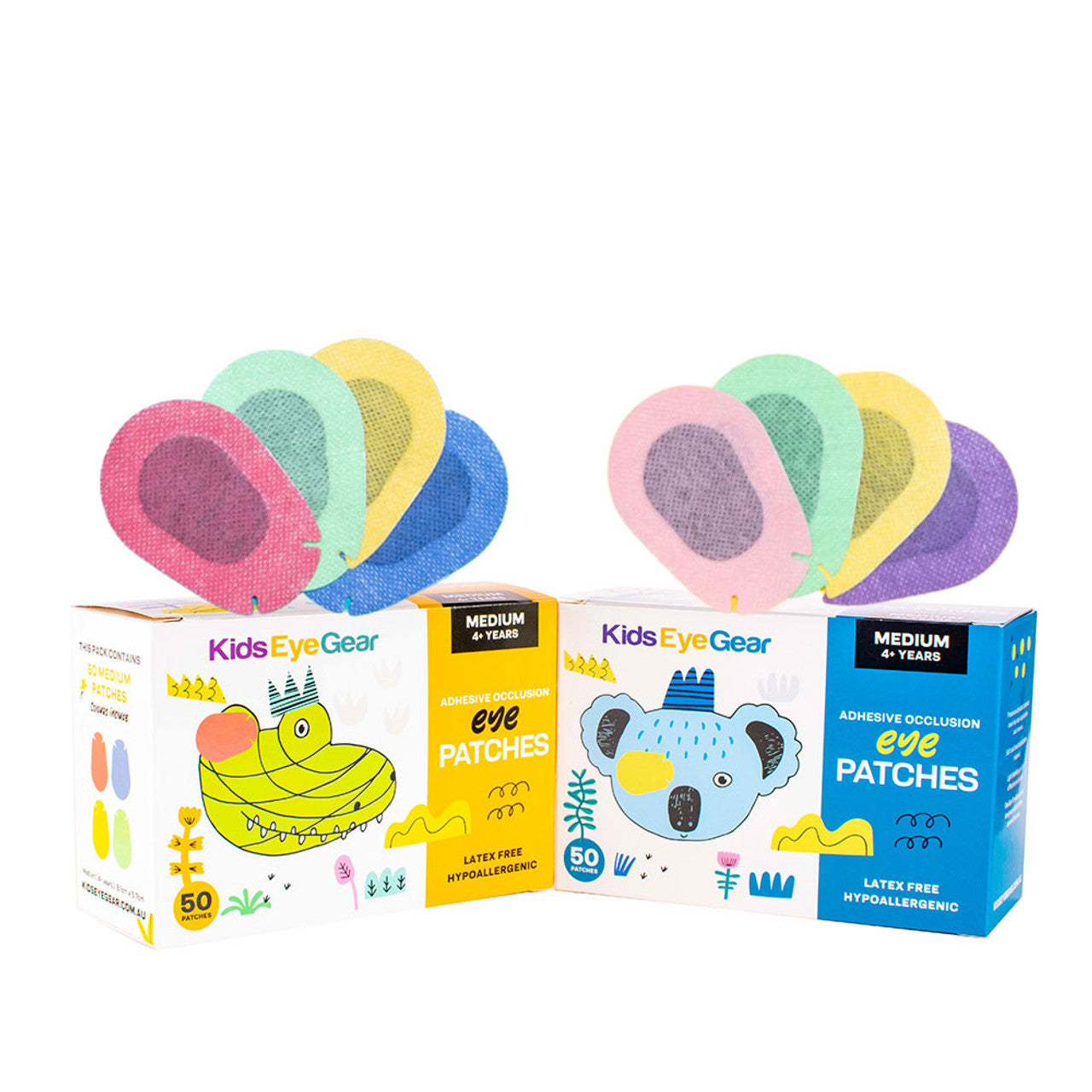
Children's Eye Patches for Amblyopia
Children's Eye Patches for Amblyopia
✔ Stock on hand — ships NZ-wide from Rose Optometry, Hamilton.
Adhesive occlusion patches for amblyopia
Soft adhesive eye patches for occlusion therapy — covering the stronger eye so the weaker one has to work. Occlusion remains a mainstay of amblyopia ("lazy eye") management in children.
Amblyopia is not really a problem with the eye. It is a problem with the connection between the eye and the developing brain: if one eye sends a blurrier image during early childhood, the brain learns to favour the other, and that preference becomes fixed unless it is addressed while the visual system is still developing.
The important part is that patching is prescribed and monitored. Which eye, how many hours, for how long, and when to stop are all decisions made by your child's optometrist or ophthalmologist, based on the type and severity of the amblyopia and how your child responds at each review. Those decisions get adjusted over time, which is why the review visits matter as much as the patches. The trial evidence below is worth knowing, and we would rather state it than hide it — but it describes groups of children in studies, not your child, so it is set out here as evidence and not as instructions.
These patches are what you buy once you have that plan. If you don't have one yet, start with an eye examination.
What the evidence shows
The figures below come from the Pediatric Eye Disease Investigator Group (PEDIG) Amblyopia Treatment Studies, as summarised by the American Academy of Ophthalmology.
- Moderate amblyopia (visual acuity 20/40–20/100): two hours a day of patching was as effective as six hours a day, and as effective as full-time patching, in children aged 3–7. About 62% achieved 20/30 or at least three lines of improvement within roughly four months.
- Severe amblyopia (20/100–20/400): six hours a day was as effective as full-time patching, with an average of 4.1 lines of improvement.
- Where the evidence stops: there is no study comparing two hours against six hours for severe amblyopia. The lower dose has been shown to be enough for moderate amblyopia; it has not been tested that way for severe amblyopia, and we are not going to imply otherwise.
- Age at starting: starting before age 5 yields greater improvement and more stable acuity than starting between 7 and 17. That is a reason to get on with it promptly — not a reason to conclude an older child has missed the window. Treatment in older children is still worthwhile.
- Atropine instead of a patch: atropine penalisation of the stronger eye is equally effective and equally durable as patching for moderate amblyopia, and weekend-only atropine works as well as daily.
What none of that tells you is what your child should do. The specific regime for any individual child is set and monitored by their optometrist or ophthalmologist, because the right number of hours depends on the severity of the amblyopia, the child's age, and how the eye responds at each review — and over-patching carries its own risk to the eye that is covered. Bring these findings to your next appointment by all means. Please do not use them to set the hours yourself.
Who it's for
- Children on a prescribed occlusion (patching) programme for amblyopia
- Families topping up between review visits
- Post-surgical or short-term occlusion where a clinician has advised patching
- Not for use without an eye examination and a clinician's instructions
Questions we get asked
How many hours a day should my child patch?
Whatever your child's optometrist or ophthalmologist has prescribed. For context, the PEDIG studies found two hours a day was as effective as six hours, and as full-time patching, for moderate amblyopia in children aged 3–7, and that six hours a day matched full-time patching for severe amblyopia. That is trial-level evidence about groups of children; the dose for an individual child is still set, reviewed and changed by the clinician managing them. If you are unsure of the current instruction, ring the clinic managing your child rather than guessing.
Can I start patching on my own before an eye exam?
Please don't. Patching the wrong eye, or patching for something that is not amblyopia, wastes developmental time you cannot get back, and occluding a healthy eye needs to be monitored. Get the diagnosis first, then the patches.
My child is already at school — is it too late?
No. Starting before age 5 does yield greater improvement and more stable acuity than starting between 7 and 17, so earlier is genuinely better — but treatment in older children is still worthwhile and still worth starting. What suits your child depends on the type of amblyopia and what has already been tried, so ask the clinician managing them rather than assuming the window has closed.
Are there alternatives to patching?
Sometimes. For moderate amblyopia, the PEDIG studies found atropine penalisation of the stronger eye to be equally effective and equally durable as patching, with weekend-only dosing working as well as daily. Atropine is a prescription medicine, so that is a conversation with your clinician rather than something to arrange yourself. Depending on the case, computer-based vision training — for example Eye Hero, done at home with progress monitored between visits — may also be discussed. Whether any of them suits your child is a clinical decision, so ask us at the next review.
The patch irritates my child's skin. What now?
Tell us rather than quietly persisting or stopping. Gentler adhesives and non-adhesive options exist, and a skin reaction is a solvable problem — an abandoned treatment is a harder one.
My child keeps pulling it off. Any practical tips?
Pair patch time with something they enjoy and want to do anyway, keep it at the same point in the day, and use a simple sticker chart for younger children. If it is still a battle, say so at the review — the regime can often be adjusted rather than abandoned.
Why buy from Rose Optometry
- Independent, optometrist-owned New Zealand practice — in Hamilton since 1969.
- Free optometrist advice with every order; we run a children's vision and myopia clinic in Hamilton.
- Free NZ shipping on orders over $100, sent NZ-wide from Hamilton.
Couldn't load pickup availability