
Keratoconus is a condition where the cornea — the clear front window of the eye — gradually thins and bulges forward into a cone shape instead of staying evenly curved. Because the cornea does most of the eye's focusing, that distortion scatters light before it ever reaches the back of the eye.
It typically starts in the teens or early twenties and progresses for a decade or two before stabilising. It affects both eyes in most people, usually asymmetrically.
The reason we write about it more than its prevalence would suggest: the treatment that halts progression works best before much damage is done, and the early signs are easy to mistake for an ordinary changing prescription.
Signs worth taking seriously
A prescription that keeps changing, particularly the astigmatism. New glasses every year that never feel quite right is the classic history.
Vision that glasses no longer fully correct. Corneal distortion in keratoconus is irregular, and spectacle lenses can only correct regular astigmatism. At some point the glasses simply stop getting you to 6/6, no matter how carefully they're refracted.
Ghosting, streaking and haloes, especially at night. Many people describe multiple overlapping images from a single light — car headlights smeared upwards, or several moons.
Glare and light sensitivity that's out of proportion to the conditions.
Frequent, vigorous eye rubbing. This is both a symptom and, on current evidence, a genuine risk factor for progression. Allergic eye disease, eczema and hay fever run alongside keratoconus more often than chance would explain, and the rubbing they provoke appears to be part of the link.
A family history. Around one in ten people with keratoconus has a close relative with it, so siblings and children of anyone diagnosed are worth screening.
How it's diagnosed
Not by a standard vision chart alone. Diagnosis relies on mapping the shape of the cornea — corneal topography or tomography — which shows the steepening and thinning long before it's visible in ordinary examination, and lets us compare scans over time to see whether it's progressing.
That comparison is the important part. A single scan tells us the shape today; a series tells us whether the condition is stable or moving, and that's what determines whether cross-linking is indicated.
Treatment in New Zealand
There are two separate goals, and they're often confused.
Halting progression: corneal cross-linking
Cross-linking uses riboflavin drops and controlled ultraviolet light to strengthen the bonds within the corneal tissue. Evidence supports it as effective at slowing or halting progression in most cases.
Two honest points: cross-linking stabilises rather than reverses — it's designed to stop things getting worse, not to restore vision that's already been lost — and it doesn't remove the need for lenses. Most people who have it still wear contact lenses afterwards, they just don't keep needing stronger and more complex ones.
It's most valuable in younger patients with documented progression, which is precisely why early diagnosis matters. It's performed by ophthalmologists; your optometrist refers.
Restoring vision: contact lenses
Because the problem is an irregular corneal surface, the fix is to replace that surface optically with a regular one. A rigid lens does exactly this — it holds its own smooth shape, and the tear film between lens and cornea fills the irregularities.
- RGP (gas permeable) lenses work well in mild to moderate keratoconus.
- Scleral lenses vault the entire cornea and rest on the white of the eye. They're the option that transforms things for many people with moderate to advanced keratoconus, or for anyone who can't tolerate a corneal lens. They're also more comfortable than people expect, because nothing touches the sensitive cornea.
- Hybrid and specialty designs sit between the two.
Fitting these is iterative — expect several appointments and adjustments. That's normal and not a sign anything is going wrong.
In advanced cases where scarring means lenses can no longer give useful vision, corneal transplant remains an option, and outcomes are generally good. It's needed far less often than it used to be, largely because cross-linking and modern lens designs have changed the trajectory.
Living with it
Stop rubbing your eyes. This is the single piece of self-management with the clearest rationale. If itch is driving it, treat the itch properly — that's a conversation worth having rather than something to endure.
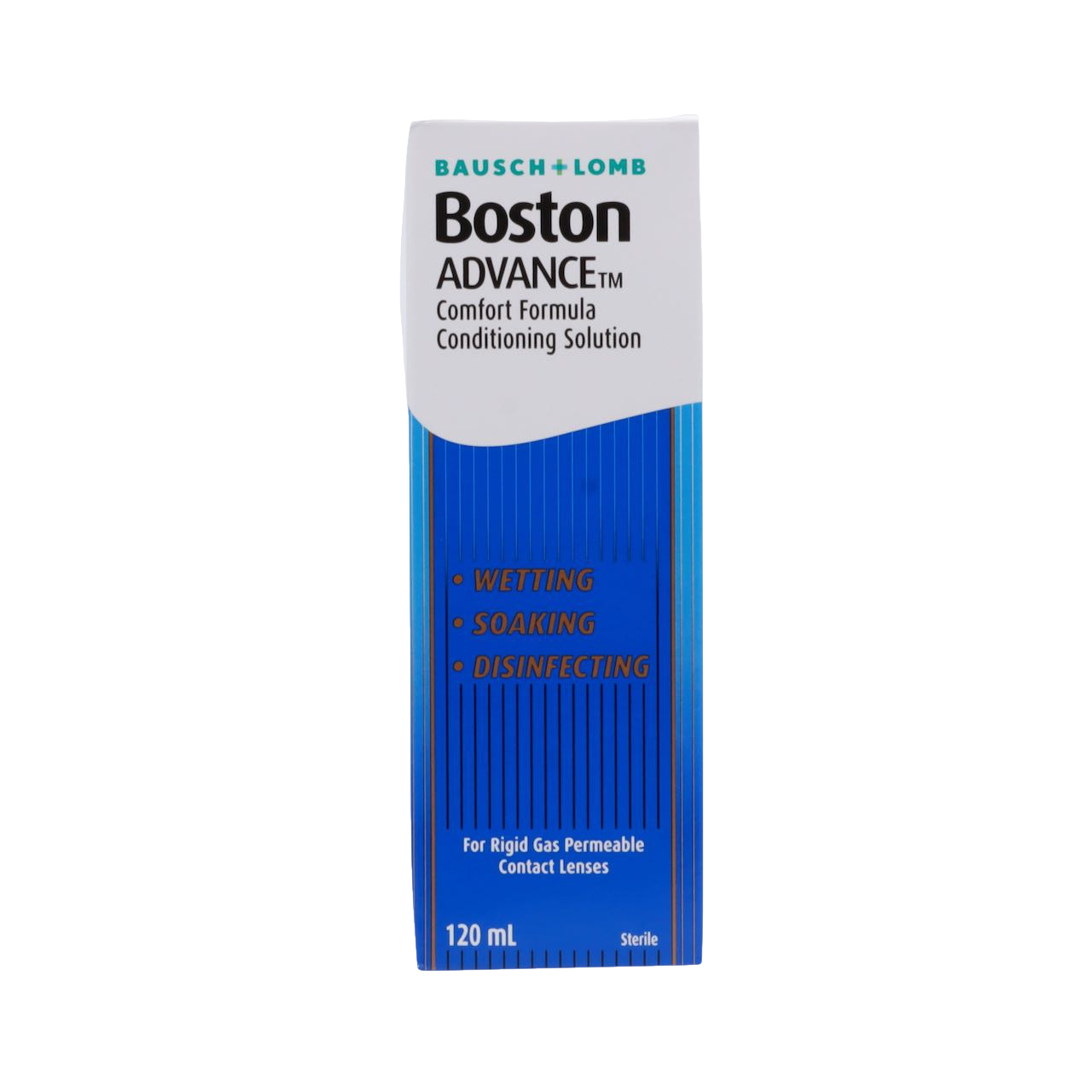
Look after the lenses. Rigid and scleral lenses are custom devices; how they're cleaned affects both vision and safety. Our ortho-K and RGP care guide covers the routine in full, and the products are in Scleral & Specialty Lens Care NZ and RGP & Ortho-K Lens Care NZ. Use only a saline intended for rigid and scleral lens use — if you've been given something else, check with us first.
Never wear a lens on a red or painful eye. Take it out and get seen.
Keep your review appointments even when things feel stable — progression can be silent, and the point of monitoring is to catch it while cross-linking is still worthwhile.
Dry eye is common alongside lens wear; a preservative-free lubricant used around lens wear helps many people. See which drop suits which eye.
If you're worried about it
If your prescription keeps shifting, your glasses never quite get you there, or you have a family member with keratoconus, ask for corneal topography specifically. It's quick, it doesn't touch the eye, and it either settles the question or gives you a baseline to compare against in future.
We do this at our Hamilton practice, and we've been looking after keratoconus patients here for decades.
→ Book a keratoconus appointment (new patients) · 45 minutes
Please arrive ten minutes early for pre-examination testing.
Rose Optometry, Hamilton — optometrist-owned since 1969. Lens care products are in stock and dispatched from the practice, with free NZ shipping over $100.
Written by Jagrut Lallu — BOptom (Hons), MSc Specialty Lenses (Hons), FIAOMC. Therapeutic Optometrist & Contact Lens Specialist. Founder, New Zealand Eye Research Centre; Partner, Rose Optometry; WCO Asia-Pacific Myopia Ambassador; International Myopia Institute NZ Ambassador; Clinical Senior Lecturer, Deakin School of Optometry; Honorary Teaching Fellow, University of Auckland.
This is general information about a condition that varies enormously between individuals. It is not a diagnosis and does not replace an examination — if you have any of the signs above, book one.