

Choosing the Right Contact Lens Solution: RGP vs Soft vs Ortho-K
Author: Jagrut Lallu, BOptom (Hons), MSc Specialty Lenses (Hons), FIAOMC. Therapeutic Optometrist & Contact Lens Specialist. Founder, New Zealand Eye Research Centre; Partner, Rose Optometry.
Published by the New Zealand Eye Research Centre. General information only — not a substitute for a personalised assessment.
Walk into any pharmacy and the contact lens solution shelf is baffling. Using the wrong solution for your lens type is a common cause of discomfort — and occasionally of real harm. Here is a clear guide to matching the solution to the lens. You can also browse our full range of contact lens solutions by lens type.
First, know your lens type
- Soft lenses — the most common daily and monthly lenses.
- RGP / hard lenses — small rigid lenses.
- Ortho-k lenses — rigid lenses worn overnight for myopia control.
- Scleral lenses — large rigid lenses that need saline for insertion.
Soft lens care
Soft lenses use multipurpose solutions that clean, disinfect and store in one step, or hydrogen peroxide systems such as AOSept Plus with HydraGlyde for a preservative-free deep clean (these must be fully neutralised before the lens goes near your eye — see our AOSept Plus vs HydraGlyde guide). Never top up old solution — always use fresh.
RGP & ortho-k care
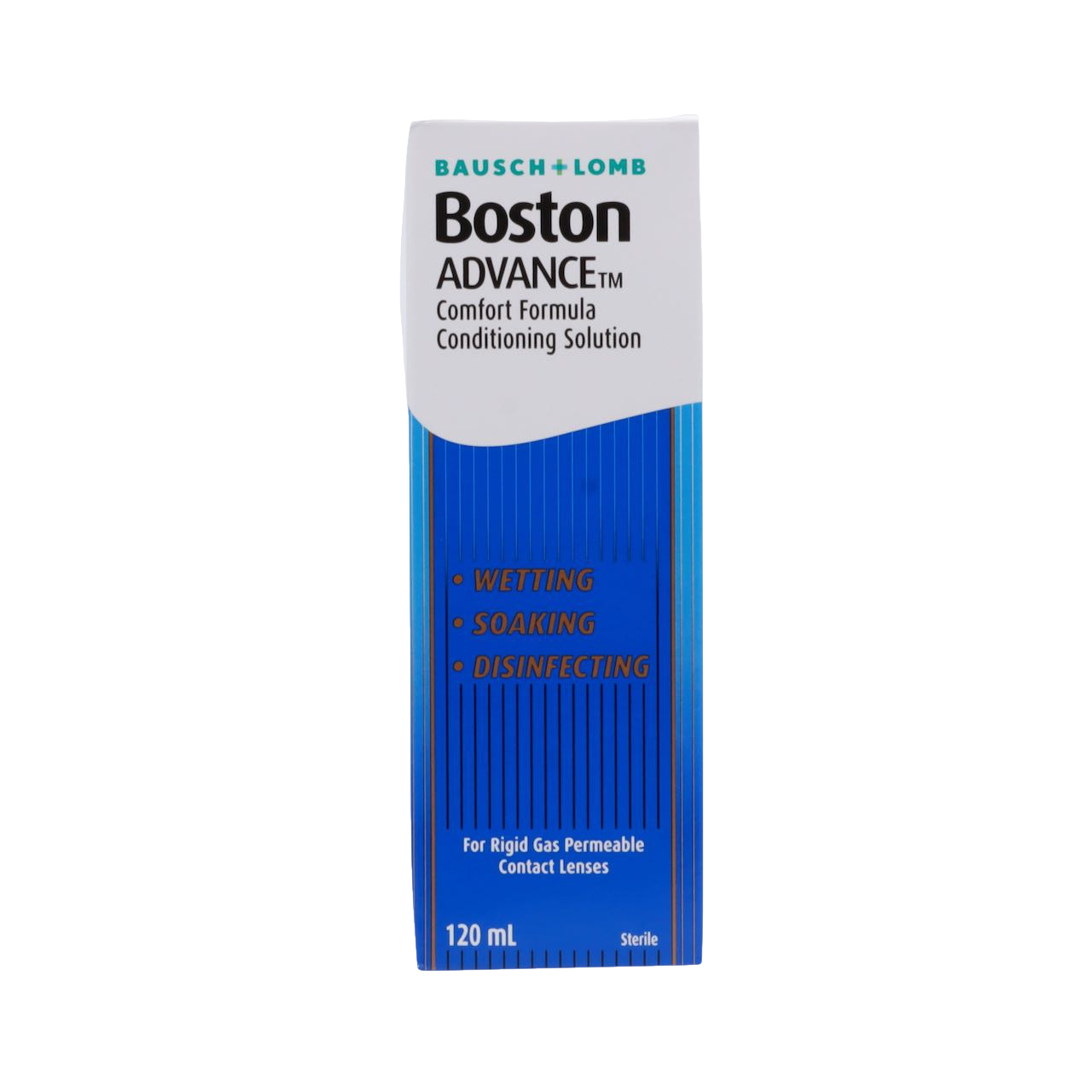
Rigid lenses need rigid-specific conditioning/soaking and cleaning solutions — soft-lens multipurpose solutions are not designed for them. See our RGP & ortho-k lens care range. For overnight ortho-k lenses in particular, correct daily cleaning plus periodic protein removal keeps the lenses clear and safe. Because ortho-k lenses touch the eye overnight, hygiene discipline is non-negotiable.
Scleral lens care
Scleral lenses are cleaned with rigid-lens solutions but filled with preservative-free saline for insertion — never with multipurpose solution, which can irritate the cornea when held against it for hours. Preservative-free unit-dose saline is ideal; see our scleral & specialty lens care range.
Three universal rules
- Never use tap water on lenses or cases — it carries Acanthamoeba, a rare but sight-threatening risk.
- Rub and rinse even with “no-rub” solutions — it measurably improves cleaning.
- Replace your case every 1–3 months.
Talk to us
If you are unsure which solution suits your lenses, ask us — it is a quick question that prevents most avoidable problems. Rose Optometry stocks matched solutions for every lens type, backed by the New Zealand Eye Research Centre.
References
- Wu YT, Willcox M, Zhu H, Stapleton F. Contact lens hygiene compliance and lens case contamination. Cont Lens Anterior Eye. 2015;38(5):307–316.
- Cope JR, Collier SA, Rao MM, et al. Contact lens–related corneal infections. MMWR. 2015;64(32):865–870.